Neighbourhood picks
Balneário Camboriú or Itajaí: Choosing Your Base in Santa Catarina
Two neighbouring cities at the mouth of the Itajaí-Açu river, 20 minutes apart and completely different in character — here is how to decide which one suits your trip.
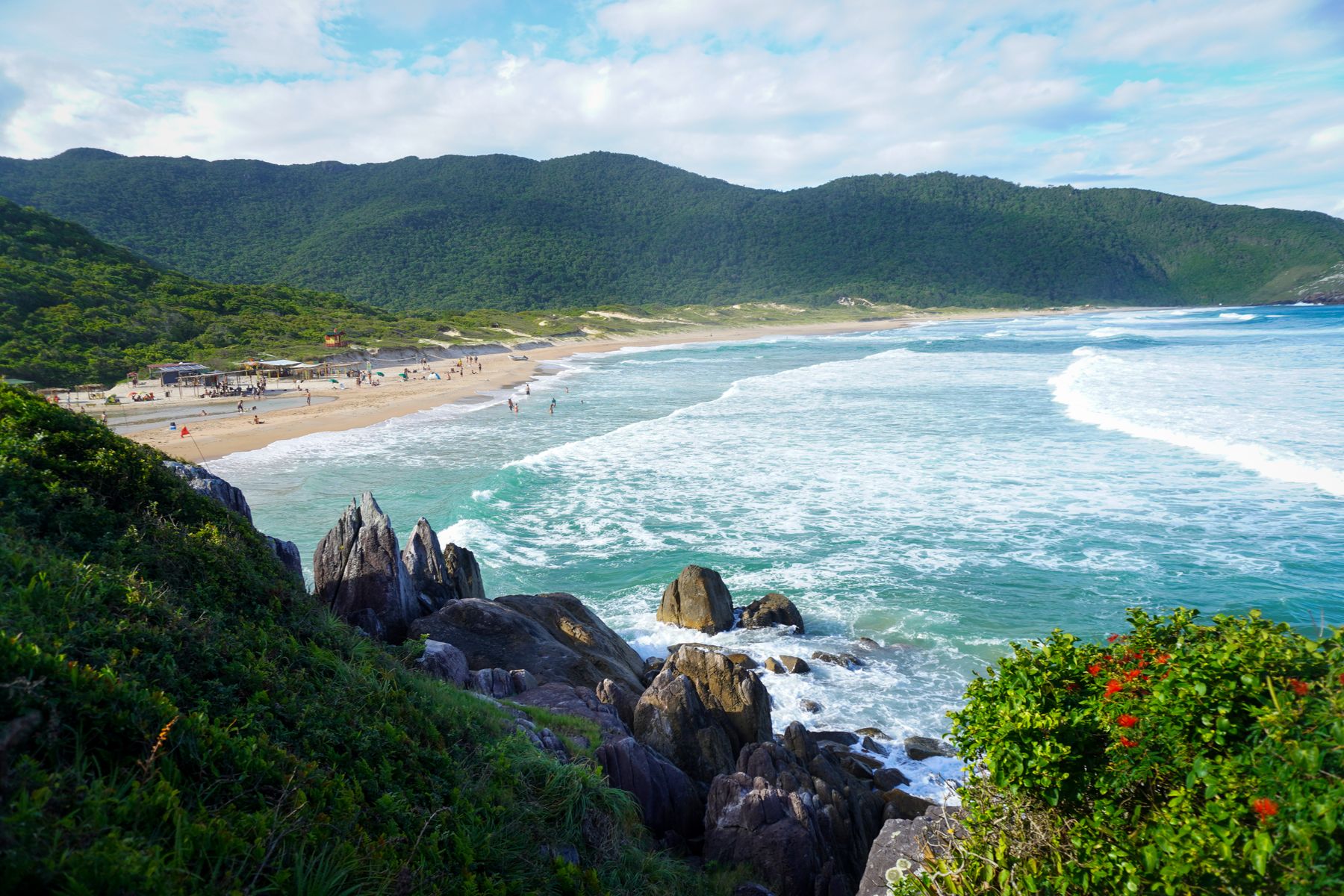
Two cities, one coastline, very different rhythms
Balneário Camboriú is the vertical city: a wall of apartment towers along Avenida Atlântica, a beach that runs roughly 6 km from Barra Sul to the northern Pontal, and a skyline that looks engineered rather than grown. Itajaí sits just across the river mouth, flatter and more workaday, with its life centred on the Port of Itajaí, the fishing quarter at Canto do Morcego, and the long Praia Brava strip that actually faces the open ocean rather than a sheltered bay. The drive between the two centres is about 15 to 20 minutes via the BR-101 or the Ponte Itajaí-Açu, depending on traffic.
If you want the beach to be the whole point of the day, Balneário Camboriú is more convenient to a wider range of things: the beach itself, the cable car at Parque Unipraias, the molhe at Barra Sul where the bay meets the ocean. Itajaí rewards a slower trip — the historic centre around Rua Hercílio Luz, the Museu Histórico, and the seafood restaurants near the port. Neither is better, but they ask different things of you, and the practical difference shows up in traffic, parking and how far you walk for a coffee.
Where you sleep, and what it costs
In Balneário Camboriú the geography of hotels is almost binary: Avenida Atlântica and Avenida Brasil run parallel to the beach, and anything within a block of the sand commands a premium, especially in January and February. Hotels on Avenida Central and around the Praia Central end of the city are convenient for the beach and the Unipraias station but noisy at night. The Barra Sul end, near the molhe, is quieter and better for families, though you walk further for restaurants. In low season, roughly May to September, rates drop sharply and the same room costs a fraction of a summer booking.
Itajaí splits into three practical zones. Praia Brava has the resort-style hotels and the best surf, but you need a car for everything else. The city centre around Rua Hercílio Luz and the riverside is more affordable and walkable, close to restaurants and the port, though the beach there is not the draw. Between the two, along the Interpraias road, there are smaller pousadas that suit travellers with a vehicle. If I were booking a first visit for a couple who want beach and nightlife, I would take a hotel two blocks back from Avenida Atlântica in Balneário Camboriú — you save on the sea view and still walk to the sand in five minutes.
Beach days, boats and rainy afternoons
The Praia Central in Balneário Camboriú is wide but busy, with lifeguard posts and a promenade that gets crowded from mid-morning. The better swimming is at Praia de Taquaras and Praia de Taquarinhas, reached by the Interpraias road south of Barra Sul, or by the cable car from the Unipraias station at the north end. The cable car also connects to Laranjeiras beach and the Barra Sul molhe, which is a genuinely good half-day. Boat trips leave from the Barra Sul marina regularly; you do not need to book far ahead outside peak weeks.
Itajaí's best beach is Praia Brava, a long open-ocean stretch that surfers use seriously. Praia dos Amores and the Cabeçudas area are calmer for families. The city's rainy-day strength is its historic centre: the Museu Histórico de Itajaí, the Mercado Público, and the riverside near the port where you can watch ships come in. Balneário Camboriú has its own indoor options — the Unipraias complex and the Oceanic Aquarium — but on a wet day both cities fill up. If your itinerary is mostly beach, Balneário Camboriú is the more efficient base. If you want a working city with a fishing port and easier parking, Itajaí wins.
Getting there, getting around, and when to go
Both cities are served by Navegantes airport (Aeroporto Internacional Ministro Victor Konder), which sits across the river from Itajaí and about 20 to 30 minutes from Balneário Camboriú by car. From Florianópolis the drive is around 80 to 90 km on the BR-101, roughly an hour and a half outside holiday traffic. From Curitiba it is about 200 km, closer to two and a half hours. Public buses connect the two cities frequently, but a car makes the Interpraias road and Praia Brava far more accessible, and parking in Balneário Camboriú in summer is a genuine headache.
The season matters more here than in most of Brazil. January and February are peak: hot, crowded, and priced accordingly. March and April bring warm water and smaller crowds — my pick for a first visit. May to September is cooler and quieter, fine for sightseeing in Itajaí and cheap for hotels in Balneário Camboriú, though sea swimming becomes brisk. October and November are comfortable again. If you are spending more than four nights, splitting them — two or three in Balneário Camboriú for the beach and cable car, the rest in Itajaí for the port and Brava — is the arrangement I would book.
Related articles
Good to know
Questions, answered
Is it easy to visit both cities from one hotel?
Yes. The two centres are about 15 to 20 minutes apart by car via the BR-101 or the Ponte Itajaí-Açu. Buses run frequently between them. Many travellers base themselves in Balneário Camboriú and take a day trip to Itajaí, or the reverse, without changing hotels.
Which is better for families with young children?
Balneário Camboriú's Praia Central is wide, patrolled and close to hotels, and the Unipraias cable car is a reliable hit. Itajaí's Praia dos Amores is calmer and easier to park near. For a beach-focused family trip, I would choose the Barra Sul end of Balneário Camboriú.
Where should surfers stay?
Praia Brava in Itajaí is the most consistent break in the area and has the surf culture to match. Staying near Praia Brava means you need a car for restaurants and the city centre, but it beats commuting from Balneário Camboriú every morning during peak swell.
How do I get there from Navegantes airport?
Navegantes airport sits across the river from Itajaí, roughly 10 minutes from Itajaí's centre and 20 to 30 minutes from Balneário Camboriú by car or app-based transport. There is no train. Renting a car at the airport is straightforward and worth it if you plan to explore the coast.
When is the cheapest time to book a hotel?
Outside the January to February peak and major holidays, rates in both cities fall noticeably. May through September is the quietest and cheapest stretch, though sea swimming is cool. March and November offer a good balance of weather and price before the summer surge.
Do I need a car in Balneário Camboriú?
Not strictly. The beach, restaurants and the Unipraias station are walkable if you stay near Avenida Atlântica. Parking in summer is difficult and expensive, so arriving without a car is often simpler. A car only pays off for day trips to the Interpraias beaches and Itajaí.
What is worth skipping?
Skip Praia Central at midday in January if you dislike crowds, and do not expect a quiet beach holiday in either city during Carnival week. The riverside port area of Itajaí is interesting but not a beach substitute, and several inland attractions are not worth the drive in heavy holiday traffic.
Which city should I book for a first trip?
For most first visits, book Balneário Camboriú for the beach, cable car and walkable dining, then day-trip to Itajaí. If you have more than four nights, splitting your stay gives you both the resort coast and the working port city without wasted driving.
Doing good is the business: every booking through Stay Santa Catarina funds one verified tonne of carbon removal — same room, same price, no markup.
Start your search